Connecting the Dots: Why Jimmy Osmond Is the Glue Between Old Fans and New Ones
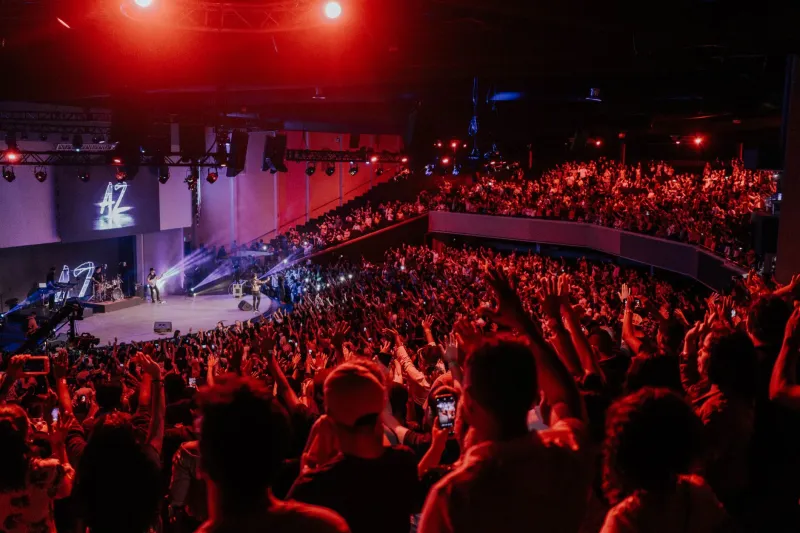
There's a moment that happens at almost every Jimmy Osmond show. A parent leans over to their kid — maybe a teenager who stumbled onto an Osmonds playlist on Spotify, or a college student who caught a clip on TikTok — and says something like, "I had this poster on my wall when I was your age." And somehow, that kid gets it. They laugh, they clap, they sing along to words they only half-know. That moment? That's Jimmy doing what he's always done best.
Fans of this site know the Osmond story front to back. But here's something worth sitting with: of all the Osmond siblings, Jimmy has carved out the most unusual position in the family's ongoing cultural story. He's not just a nostalgia act. He's not just a footnote. He's the thread that keeps pulling the whole tapestry together — connecting die-hard fans from the original era to a whole new generation that's just now figuring out what the fuss was all about.
Why Jimmy? Why Not the Others?
Fair question. Donny is arguably the most famous Osmond outside the family name itself, and Marie has had a decades-long television presence that's kept her squarely in the mainstream. So why does Jimmy end up being the generational bridge?
Part of it is timing. Jimmy was literally the youngest — the "Little Jimmy" who charmed audiences at an age when most kids were worried about spelling tests. That youth gave him something his siblings didn't have in quite the same way: he grew up with the audience. Fans who were teenagers when Donny was heartthrob-of-the-moment were closer in age to Jimmy. They watched him go from a novelty act to a genuine performer. That journey felt personal to them.
But the other part is harder to quantify. Jimmy has always had a warmth and accessibility that reads as genuinely unguarded. Whether he's doing a Q&A at a fan convention, posting behind-the-scenes clips on social media, or sitting down for an interview, he comes across as someone who actually enjoys the conversation. That's not nothing. In an era when celebrities feel increasingly curated and distant, a guy who seems like he'd happily grab coffee with you and talk about the old days is magnetic.
The Streaming Effect and the Nostalgia Wave
Here's where things get interesting for the newer generation of fans. Streaming platforms have done something remarkable for legacy artists — they've collapsed the timeline. A fifteen-year-old in Ohio can discover "Long Haired Lover from Liverpool" on the same afternoon they're listening to whatever's trending this week. The algorithm doesn't care that a song is fifty years old. If it connects, it connects.
The Osmonds have benefited from this in a real way. Their catalog — full of genuinely catchy, well-produced pop — holds up better than a lot of their contemporaries. And when younger listeners start pulling on that thread, they often end up in fan communities where Jimmy is very much an active presence. His social media game, while not flashy, is consistent and personal. He shares memories, interacts with fans, and occasionally drops something that sends the community into a frenzy. That kind of engagement is exactly what a younger fan raised on parasocial relationships with YouTubers and streamers recognizes and responds to.
Jimmy essentially speaks two dialects. He can talk to the fan who's been in the Osmond world since 1972 and knows every B-side and tour date. And he can engage with someone who just heard the family's name for the first time last Tuesday. That bilingual quality — emotionally speaking — is genuinely rare.
Fan Conventions and the Living Archive
Anyone who's been to an Osmond fan event in the last decade knows the demographic spread has been shifting. Yes, the core audience still skews toward people who lived through the original era. But there are more younger faces showing up, often dragged along by a parent or grandparent and then completely hooked by the end of the weekend.
Jimmy has leaned into these events in a way that feels intentional. He shows up. He stays. He takes the photos, answers the questions, tells the stories. For a newer fan, meeting Jimmy at one of these gatherings isn't just meeting a celebrity — it's getting a direct line to a piece of American pop history. He becomes the living archive, the primary source, the person who was actually there.
That's a powerful thing to offer. And it's something that no streaming playlist or documentary can fully replicate.
Keeping the Osmond Name Alive Without Making It Feel Like a Museum Piece
One of the trickier aspects of legacy management — and make no mistake, that's part of what Jimmy does — is keeping something relevant without turning it into a relic. There's a version of this story where the Osmond brand becomes purely nostalgic, a sepia-toned thing people appreciate from a distance but don't really engage with emotionally.
Jimmy actively works against that. His performances aren't museum exhibits. They're shows. He brings energy and humor and genuine investment to the stage, and that translates across age groups. A sixty-year-old superfan and a twenty-two-year-old curious newcomer can sit in the same room and both walk out feeling like they got something real.
That's the bridge in action. Not a metaphor — an actual, living, performing human being who makes the past feel present.
What This Means for the Fan Community
For those of us who've been in the Osmond fan world for a long time, Jimmy's role as a generational connector is something to celebrate. It means the community doesn't have to be a closed loop. New fans bring new energy, new questions, new perspectives. They discover old interviews and share them. They make fan edits that introduce the catalog to their followers. They show up at events and remind the long-timers why this music mattered in the first place.
And at the center of all of it, Jimmy keeps showing up — accessible, warm, and genuinely grateful for every single person who cares about what the Osmonds built.
That's not a small thing. That's everything.