Hidden Tracks and Half-Finished Dreams: What Jimmy Osmond's Vault Recordings Tell Us About the Artist Behind the Hits
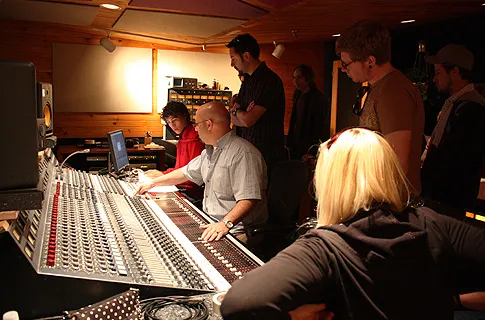
Photo: Metalworks Institute, CC BY-SA 3.0, via Wikimedia Commons
Every musician worth their salt has a drawer full of songs the world never heard. Some of those songs got shelved because the timing was wrong. Some got passed over because they didn't fit the commercial direction of a particular album cycle. And some — maybe the most interesting ones — got set aside because they were too personal, too experimental, or too far ahead of where the artist was ready to go publicly.
Jimmy Osmond's archive holds all three kinds. And for fans who've spent years loving the official catalog, the vault recordings offer something genuinely different: a window into the creative process of an artist who has spent his entire life refining his craft, often in ways the public never got to witness directly.
This isn't about songs that were rejected because they weren't good enough. This is about the full, complicated, fascinating story of an artist in motion — and the sonic artifacts that document that journey.
The Demo as a Diary
Before we get into the specifics, it's worth saying something about what demos actually are and why they matter. In the modern streaming era, there's a tendency to treat the final released version of a song as the definitive version — the one that counts. But for anyone who's spent time studying how music actually gets made, the demo is often where the real story lives.
A demo is an artist thinking out loud. It's the sketch before the painting, the rough draft before the manuscript. And because it's not meant for public consumption, it tends to be more honest than anything that goes through the full production and marketing pipeline. The vocal performance is rawer. The arrangement choices are less calculated. The emotional content sits closer to the surface.
For an artist like Jimmy Osmond — someone who has spent decades navigating the expectations of a family brand, a devoted fanbase, and the ever-shifting demands of the commercial music industry — the demo recordings in his archive represent a kind of freedom that the official releases can't always match.
Early Sessions and the Sound He Was Searching For
The earliest recordings in Jimmy's archive date back to his formative years as a performer, when he was still figuring out what kind of artist he wanted to be beyond the context of the family act. These sessions are particularly revealing because they capture a young musician actively experimenting with his own voice — both literally and figuratively.
What's striking about these early recordings isn't just the technical development you'd expect to see in a young artist growing into his instrument. It's the range of stylistic directions Jimmy was exploring. There are tracks that lean heavily into country influences that never made it into the official Osmond catalog. There are gospel-inflected arrangements that show a different side of his vocal approach. There are uptempo pop experiments that sound surprisingly contemporary given when they were recorded.
Taken together, these early sessions paint a picture of an artist with genuinely broad musical curiosity — someone who wasn't content to stay inside the lane that had been defined for him commercially, even if that's ultimately where many of his official releases landed.
The Middle Period: Risk-Taking in the Studio
Some of the most interesting material in Jimmy's archive comes from the middle stretch of his career, a period when the music industry was undergoing significant transformation and many established artists were struggling to find their footing in a rapidly changing landscape.
The unreleased recordings from this era show Jimmy taking creative risks that his official releases of the same period didn't always reflect. There are production experiments that anticipate sonic trends by several years. There are collaborative tracks with artists from unexpected corners of the music world that suggest a broader network of musical friendships than the public record documents.
Perhaps most interestingly, there are several recordings from this period that show Jimmy wrestling with the tension between his artistic instincts and his commercial responsibilities. You can hear it in the arrangement choices — moments where a track starts heading in one direction and then seems to correct itself, pulling back toward more familiar territory. For a musician navigating the particular pressures that came with the Osmond name, that tension was real and ongoing.
What the Unfinished Songs Reveal
Among the most intriguing items in any artist's archive are the songs that were started but never completed — the half-finished ideas that got set aside for reasons that aren't always clear from the recordings themselves. Jimmy's vault has its share of these, and they're worth thinking about carefully.
An unfinished song isn't a failure. It's a moment of creative decision-making frozen in time. Sometimes a track gets abandoned because the artist ran out of inspiration for that particular idea. Sometimes it gets set aside because a better version of the same emotional territory emerged elsewhere. And sometimes — and this is the category that tends to produce the most fascinating artifacts — a track gets shelved because the artist wasn't ready to go where the song was asking them to go.
Several of the unfinished recordings in Jimmy's archive fall into that last category. They're songs that reach toward a level of emotional directness or artistic vulnerability that his official releases of the same era didn't always match. Whether that gap reflects commercial caution, personal privacy, or simply the practical realities of the music business is something only Jimmy could say definitively. But for fans, those fragments are windows into an interior creative life that's richer and more complex than the hits alone would suggest.
The Archive as Legacy
Here's the thing about vault recordings: they matter more now than they ever have. In an era when streaming has made the back catalog as accessible as the new releases, listeners are increasingly interested in the full story of an artist's development rather than just the greatest hits. The demos, the outtakes, the half-finished experiments — these aren't footnotes anymore. They're part of the essential text.
For Jimmy Osmond's fans, the existence of a substantial archive of unreleased material is genuinely exciting. It means there's more to discover, more to discuss, and more to appreciate about an artist who has been part of the American musical landscape for more than fifty years.
At Jimmy G. Osmond Fan World, we'll keep following this story wherever it leads. Because if the vault recordings tell us anything, it's that the full story of Jimmy Osmond's creative life is still being written — and the most interesting chapters might be the ones we haven't heard yet.